How to Measure a Chainsaw Bar: The Right Way

Introduction

🛠️ Tools You’ll Need for Measuring Chainsaw Bar

  • Tape measure or ruler
  • Calipers (optional, for precise measurements)
  • Your chainsaw owner’s manual (for verification)

Method 1: How to Measure Chainsaw Bar Length by Cutting Length (Most Common)

First and foremost, you should learn the exact way to measure the bar length.
Steps to measure your chainsaw bar’s cutting length:

  1. Place your chainsaw on a flat surface.
  2. Start measuring from the point where the bar emerges from the saw’s body.
  3. Measure straight to the bar’s tip.
  4. Round up to the nearest even number (e.g., 18.5″ becomes 20 inches).

📌 Pro Tip: Moreover home-use chainsaws come with 16″–20″ bars check this against your measurements.

Chainsaw Bar Measurement Guide
"Start measurement at the casing"

Method 2: Measure the Total Chainsaw Bar Length

Although most users rely on the effective cutting length, sometimes it’s necessary to determine the total chainsaw bar length especially when you’re replacing a bar or verifying exact specifications. In such cases, measuring the entire bar from end to end gives a more complete picture.

To begin with, make sure your chainsaw is turned off and has fully cooled down. Next, disconnect the power source whether it’s a battery, unplugged cord, or fuel cutoff in order to avoid accidental starts.

Then, follow these simple steps:

  1. First of all, remove the chainsaw bar from the body of the saw.

  2. Afterward, place the bar flat on a clean surface.

  3. Now, take a tape measure and stretch it from the very tip of the bar all the way to the base specifically excluding the section that fits into the mount.

  4. At this point, record the full measurement in inches.

Keep in mind, this number is often longer than the advertised bar length. For example, a bar marketed as “20 inches” may actually measure around 22 inches in total. Moreover, manufacturers typically round the cutting length for simplicity. Therefore, when shopping for replacement parts or checking compatibility, it’s crucial to know both the effective cutting length and the total bar length.

On the whole, this method offers a more technical approach to bar measurement. In addition to verifying fit, it ensures you’re purchasing chains and accessories that will function properly. Ultimately, understanding how to measure chainsaw bar length using this method helps prevent mismatches and ensures your chainsaw runs safely and efficiently.

Method 3:Correct Way to Measure a Chainsaw Bar with Manual or Stamped Numbers.

When it comes to accuracy and ease, using your chainsaw’s manual or stamped numbers is one of the most reliable methods. In fact, this technique can save time and reduce measurement errors especially if you’re unfamiliar with other measuring tools.

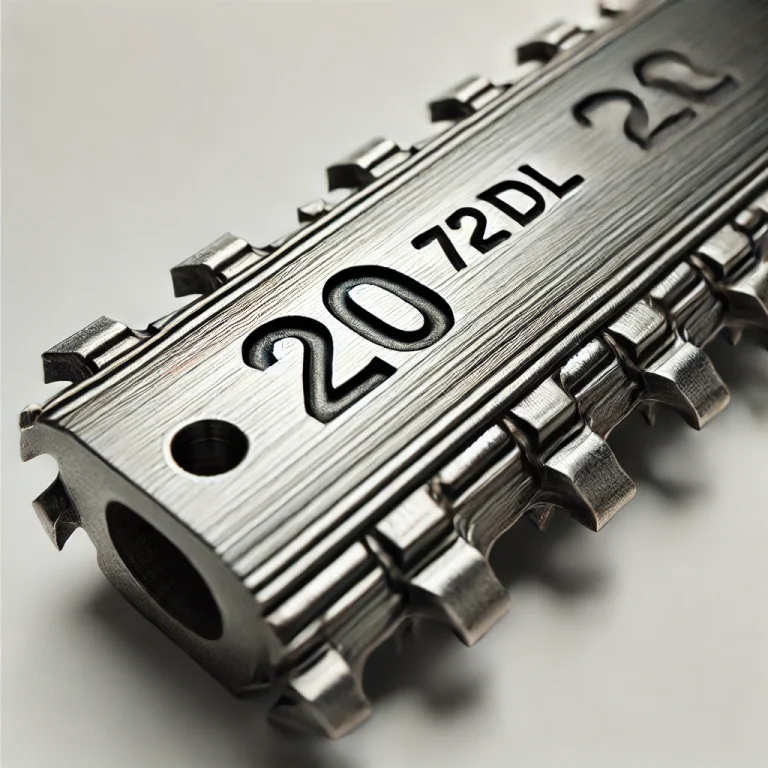
To start with, many chainsaw manufacturers conveniently imprint important specifications directly onto the bar itself. Typically, these include the bar length, pitch, gauge, and the number of drive links. For instance, you might see something like “20” / 0.325 / 72DL stamped into the metal. Each of these numbers serves a purpose and helps ensure proper part selection.

Furthermore, if the bar is too dirty or worn to read, don’t worry. Instead, check your chainsaw’s user manual. Often, the specifications will be listed there, along with compatible chain types and maintenance instructions. Additionally, many manufacturers provide downloadable manuals online, so even if you’ve lost the original, you can still access the correct information.

After identifying these numbers, the next step is to verify compatibility. To do this, cross-reference the stamped data with your chainsaw manual or the official website of the brand. Not only does this confirm accuracy, but it also prevents potential mismatches in bar or chain size.

In many cases, relying on these identifiers is quicker than manual measurement. However, it’s still a good idea to measure the bar if you suspect modifications or if the markings are no longer visible.

Ultimately, this method simplifies the process and improves safety. Because chainsaws rely on precise fitting parts, ensuring that the bar length, gauge, and drive links are correct helps minimize the risk of kickback, chain slippage, or motor strain.

Chainsaw Bar Measurement Guide
“Bar length” and “Drive Links”

🎥 Watch: How to Measure a Chainsaw Bar (Step-by-Step Video Guide)

How to Measure Chainsaw Bar Length: Common Mistakes to Avoid

Despite its simplicity, people nevertheless tend to make frequent errors. To ensure better outcomes, and in order to help you avoid common pitfalls, make sure to watch out for the following. Otherwise, you might compromise both efficiency and safety.:

❌ First of all, measuring only the visible portion of the bar is a mistake this ignores the section that sits inside the saw housing.
❌ Additionally, ignoring the bar mount type can lead to compatibility issues, as bars are not universally interchangeable.
❌
Finally confusing bar length with chain length remember chains are measured by drive links, not inches.
⚠️ Warning:

For this reason, never mismatch bar and chain sizes, because doing so can lead to dangerous kickbacks or even serious equipment damage.

How Bar Length Affects Performance:

Short Bars (12–16 inches):

    • Easier to control
    • Best for pruning, trimming, and small logs
    • Lightweight and beginner-friendly
Long Bars (18–24+ inches)
  • Designed for larger trees
  • Require greater strength and experience
  • Less forgiving in tight spaces

🧠 Just like a shoe, the chainsaw bar must fit perfectly. Otherwise, a mismatched bar can quickly throw off the saw’s balance, ultimately reducing efficiency and significantly increasing the risk of injury.

Conclusion

undoubtedly, now that you’ve measured your chainsaw bar length properly, the next step is to check your chain’s drive links to ensure a perfect match. Thus measuring once and measuring right will save you time, money, and keep you safer on the job.

👉 Want more chainsaw tips? Explore our guides on How to Sharpen a Chainsaw Chain and Chainsaw Maintenance for Beginners!

✅ Stay Safe Cut Smart

📌FAQs

Why were chainsaws originally invented?

Chainsaws were originally invented in the 18th century to assist in childbirth. Doctors created a crude version of the chainsaw to perform symphysiotomies, a surgical procedure to widen the pelvis when babies couldn’t pass through the birth canal.

Who invented the first chainsaw?

Scottish doctors John Aitken and James Jeffray are credited with inventing the first chainsaw-like device in the late 1700s. Their hand-cranked tool was designed for cutting bone more efficiently during surgery.

When did chainsaws start being used for woodcutting?

Chainsaws began transitioning to forestry use in the early 1900s. In 1905, Samuel J. Bens patented the first chainsaw for logging. Gas-powered versions appeared in the 1920s and revolutionized the timber industry.

Related Post

Leave a Comment

Your email address will not be published. Required fields are marked *