Learn Chainsaw Parts: a Comprehensive Guide.
Introduction
It may seem like a mere tool at first glance, but a chainsaw is far more than that it’s a complex, precision-engineered machine made up of several crucial components. From safety mechanisms to performance-enhancing features, every part plays a significant role in how the tool functions. Whether you’re a seasoned operator or a weekend DIY enthusiast, it’s essential to learn chainsaw parts thoroughly. understanding the parts also helps build a solid chainsaw maintenance routine, and each component not only improves your efficiency, but also helps you handle the machine more safely and confidently.
Table of Contents
ToggleIn this beginner-friendly guide, we’ll break down each part of a chainsaw and explain its specific purpose. Along the way, you’ll discover how certain features like the chain brake, anti-vibration mounts, and the bar directly impact its usability and performance. By the end, you’ll not only be able to identify each part but also appreciate how they work together to make cutting tasks faster, smoother, and safer.
Chainsaw Parts: Engine and Power Source
Engine (Gas-Powered) vs. Motor (Electric)
Power is the source of all chainsaws, and for gas-powered chainsaws, the power is from a two-stroke engine, which has fuel and oil that help it work. For strenuous tasks, these types of engines are the best. For easier tasks, an electric chainsaw uses motors powered by cords or batteries, which makes it quieter as well as environmentally safer.
Chainsaw Part Basics: Cutting Components
Guide Bar
The guide bar is the long, flat metal component on which the chain runs, and it plays a crucial role in maintaining stability during cuts. In fact, it acts as the backbone of the cutting system, guiding the chain with precision. To achieve accurate and efficient results, choosing the right guide bar length is essential. While longer guide bars are better suited for cutting through thick logs, on the other hand, shorter ones offer greater control, especially for detailed or lighter tasks. To fully understand its function within the overall mechanism, continue reading as we learn chainsaw parts and how each one contributes to safe and effective operation.
Saw Chain
This is the sharp rotating chain that cuts wood and is also referred to as the cutting chain. A chain’s tooth design and arrangement often define the rate of cutting as well as how smooth the cut will be. For safety and efficiency, the chain must always be sharp. Learn more about chainsaw sharpening to get a clear idea
Sprocket
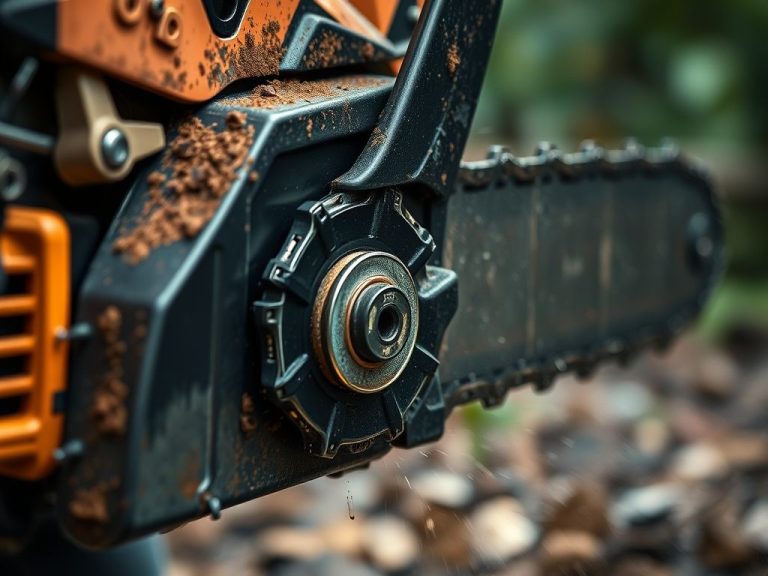
The sprocket is a toothed wheel that fuels the saw chain. In conjunction with the clutch, it rotates the chain to be wrapped around the guide bar. Although the sprocket may wear out, which may result in a loss of proper movement or swift rotation of the chain.
Power Transmission & Safety Features
Understand Chainsaw Components
Clutch
With the throttle activation, the clutch allows the chain to be powered by the motor or engine. The disengagement of the use of the unit also leads to an energy-conserving state and cessation of movement of the chain to increase safety.
Chain Brake
As one of the most critical safety features in learn chainsaw parts, the chain brake stops the chain almost immediately in case of kickback. This function can be turned on automatically or manually due to the inertia caused by a sudden jerk.
Learn Chainsaw Parts for Controlling and Handling
Front and Rear Handles
The front handle permits the operator to guide the saw while the back handle provides control and contains the throttle trigger. Handles that are ergonomically shaped do encourage ease of use by enhancing grip and reducing fatigue in the course of extended use.
Throttle Trigger
This feature regulates the speed of the engine or the motor. It is usually found on the back handle and has a throttle lockout to avert unintentional acceleration scope which may cause danger; therefore, such action serves as a vital safety measure.
🎥 A comprehensive video of Chainsaw Parts
This video provides a detailed breakdown of 26 essential chainsaw components, explaining each part’s function and its role in the tool’s overall operation. It’s particularly beneficial for newcomers seeking a clear and thorough understanding of their equipment.
Maintaining chainsaw parts
Oil Tank & Fuel Tank
Gas-powered chainsaws have separate tanks for fuel and bar oil. The fuel tank feeds the engine, while the oil tank lubricates the chain and guide bar during operation, which heightens the lifespan of the chains and guide bar by decreasing friction and wear.
Tips
Always check oil levels before use to avoid chain damage.
Air Filter
The extractor, which is strategically situated near the engine’s intake port, plays a vital role in preventing dust and other debris from entering the engine. As a result, it acts as a protective barrier that safeguards internal components from premature wear. In addition to this, a clean air filter contributes significantly to smoother engine performance. Over time, however, the air filter can become clogged, reducing airflow and efficiency. Consequently, regular cleaning or timely replacement is essential. By doing so, you not only ensure optimal engine function but also enhance its overall longevity and reliability.
Spark Plug
The spark plug is especially crucial for starting gas-powered chainsaws, including models like the Stihl gas pole saws, because it delivers the necessary spark to ignite the fuel and air mixture inside the engine. Without this ignition, the engine simply won’t run. Over time, however, the spark plug can become dirty or worn out, which is why regular inspection is essential. If your chainsaw refuses to start, one of the most common reasons is a faulty spark plug. Therefore, checking and replacing it when needed can save you both time and frustration.
Summary of Key Functions of chainsaw parts
As a complex tool, a chainsaw has different parts that perform specific functions. While the guide bar and chain components do the cutting, the engine powers the device, and safety features protect the user. Proper use as well as routine checks of these parts guarantee dependability and increased safety. You can explore the basics of chainsaw maintenance in Echo USA’s Chainsaw Maintenance Tips guide
Conclusion
Learn Chainsaw Parts is not only about knowing how to use it? It’s about mastering the parts of a chainsaw and what each one contributes. This knowledge adds a layer of responsibility and increases productivity for any operator. When you’re aware of each component, from the guide bar to the chain brake, you gain the ability to troubleshoot issues effectively and perform routine maintenance with confidence. Ultimately, familiarity with all the essential chainsaw components ensures safer operation and longer equipment life. Becoming a smarter user includes reading other advanced guides on chainsaw maintenance on chainsawtips.com.
✅ Stay Safe, Cut Smart.
📌 FAQs
A pole saw is a pruning tool that features a cutting head—usually a small chainsaw or pruning blade—mounted on an extendable pole. It is designed to help users cut or trim hard-to-reach branches without the need for ladders, making it ideal for high pruning work.
Unlike a traditional chainsaw, a pole saw allows users to cut elevated branches from the ground. While both use similar cutting mechanisms, the pole saw is mounted on a long shaft, offering extended reach and improved safety for overhead cutting.
There are four main types of pole saws:
Manual pole saws – Human-powered and lightweight, ideal for small tasks.
Electric (corded) – Plugged into power outlets, offering consistent power but limited by cord length.
Battery-powered (cordless) – Great for mobility, suitable for light-to-medium yard work.
Gas-powered – Most powerful, designed for heavy-duty jobs but require maintenance and fuel.
Related Post
Chainsaw Vibration: How It Affects Your Health and Safety.
Chainsaw Vibration: How It Affects Your...
Read MoreWhat do chainsaw injuries teach us about safety?
What do chainsaw injuries teach us...
Read MoreChainsaw Training for Beginners: Essential Safety & Usage Tips.
Chainsaw Training for Beginners: Essential Safety...
Read MoreWhich chain is better, carbide chain or steel chain?
Which chain is better, carbide chain...
Read MoreWhich Chainsaw Chain Material works best for cutting trees?
Which Chainsaw Chain Material works best...
Read MoreChainsaw Impact on Logging: Revolutionizing the Timber Industry.
Chainsaw Impact on Logging: Revolutionizing the...
Read More