Chainsaw Chaps: Your Essential Armor for Saw Safety
Introduction
Chainsaws are arguably the most perilous power tools to operate. Each year, thousands of chainsaw-related injuries occur many of which are severe and, at times, even life-changing. Fortunately, such devastating incidents are often preventable. One critical piece of personal protective equipment (PPE) stands out in reducing these risks: Chainsaw Safety Chaps.
Table of Contents
ToggleWhile chainsaws demand respect and caution, wearing the right gear can make all the difference. Chainsaw Chaps serve as a powerful first line of defense, significantly lowering the chances of sustaining a catastrophic leg injury. Whether you’re a seasoned arborist or a weekend firewood cutter, understanding their function is essential. In this article, we will explore what safety chaps are, how they work, and why they are an indispensable part of your protective gear especially for those serious about safety.
What Makes Them Essential?
Without question, Chainsaw Safety Chaps are more than just a precaution they are a necessity. First and foremost, they are engineered with layers of protective fabric that instantly clog the chainsaw’s mechanism upon contact, thereby stopping the chain before it can cause serious injury. Additionally, unlike regular workwear, these chaps are specifically designed to resist cutting forces, making them uniquely suited for chainsaw use. For anyone working around heavy timber or performing tree maintenance, this level of protection is not optional it’s essential. Furthermore, when paired with other safety gear, such as helmets and gloves, Chainsaw Safety Chaps complete a reliable PPE system that dramatically improves user safety.
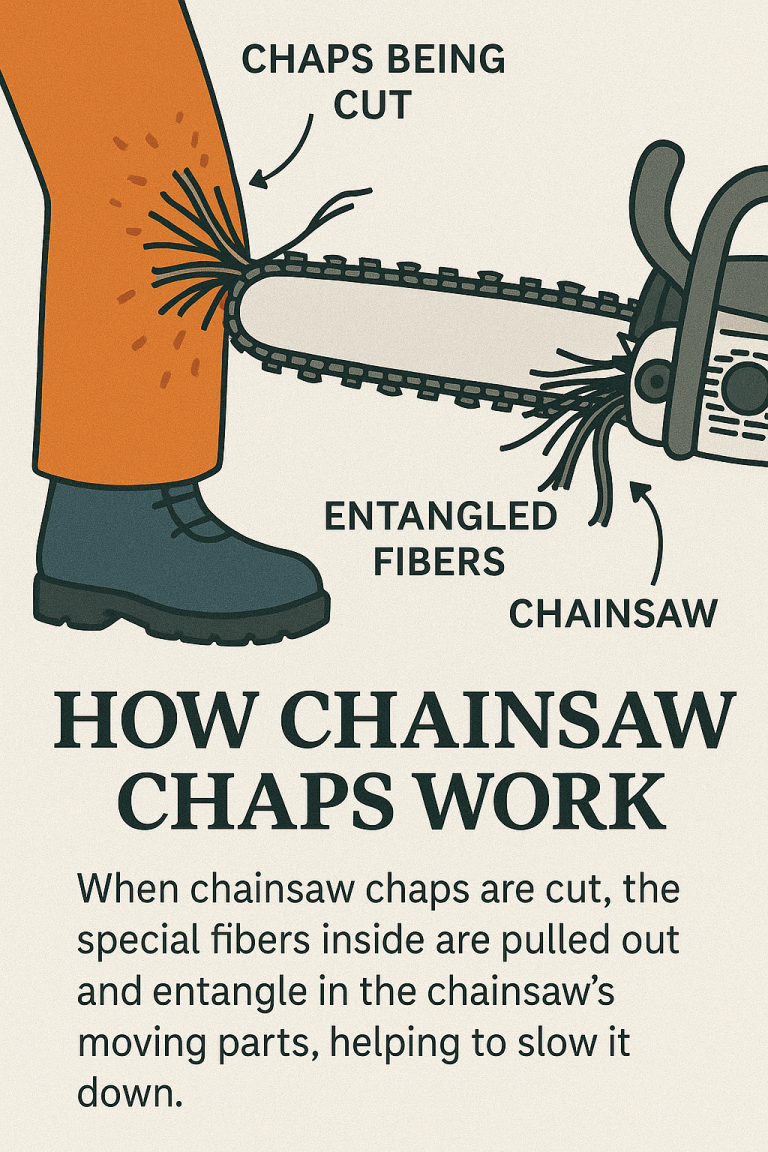
Here’s how Chainsaw Safety Chaps works:
- When the moving chain touches the chaps’ outer shell, powerful, strong, layered fibers such as Kevlar or ballistic nylon are ripped off.
- Those fibres speedily tighten about the chainsaw’s drive sprocket, jamming the chain and halting its movement.
- This event occurs in split seconds, therefore significantly reducing the degree of injury.
- To put it simply, this doesn’t passively defend you, like a helmet or glove would. This is an intelligent, reactive safety feature.
Why skipping is never an option
Neglecting leg protection for saw users is absolutely out of the question for the following reasons:
- Reduce Disabling Injuries: A rotating chain can make an exceptionally deep cut in less than a second. Moreover wearing protective leg coverings for your saw will be the best choice to avert permanent injury.
Mistakes are sometimes unintentional; after all, even experts are prone to errors and can face serious consequences. As a result, wearing chaps becomes essential, as they provide vital protection in the event of an unexpected or incorrect outcome. Consequently, even the most skilled chainsaw users should never overlook the importance of leg protection.
- Mental Satisfaction: When you know you’ve taken all the necessary safety measures, you are far more likely to work efficiently and with greater peace of mind. As a result, your focus improves, and you can operate more confidently and relaxed.
- Minimal Investment Toward Injury Risks: Cutting safety chaps may cost so little, but in reality, it’s far less than the expense of emergency surgeries or long-standing injury payments.
Check our Chainsaw PPE Guide for a list of other essential chainsaw safety equipment.
Important Features And Types of Chainsaw Safety Chaps
When it comes to leg protection, it’s important to understand your options. There are two common types of chainsaw leg protection, and each offers distinct advantages depending on the level of safety and convenience you require.
- First, Apron-Style Chaps cover only the front of your legs. Because of their open-back design, they are lightweight and can be put on or taken off with ease, making them ideal for quick jobs or casual users. However, they may not provide sufficient protection in situations where a chainsaw kickback or slip might impact the side or rear of the leg.
- On the other hand, Wrap-Around Chaps are designed for users who require maximum coverage. Unlike apron styles, these chaps offer full 360-degree protection around your legs. Therefore, they are especially beneficial for professional arborists or anyone operating in dense or unpredictable conditions. In conclusion, choosing between these two types depends on the nature of your work and the level of risk you’re willing to manage.
Look for These Key Features in Chainsaw Safety Chaps
- Tough Outer Material (e.g., Cordura nylon for durability)
- Adjustable Straps & Buckles for a secure, custom fit
- Ventilation zones to reduce overheating
- Safety Certification, such as ASTM F1897 or UL approval
🎥 Clear demonstration of how chainsaw safety chaps function to protect the operator from serious injury.
Conclusion
In chainsaw safety, chaps are not optional; they’re fundamental. Regardless of whether you’re bucking firewood or trimming a tree, don’t forgo limb convenience. The moment you start your saw, be prepared to place these fiber-filled defenders on standby. When it comes to chainsaw safety, there’s no room for compromise and chainsaw chaps are one of the smartest, most effective protections you can wear. These high-performance leg coverings don’t just guard against injury; they actively stop a chainsaw in its tracks. Whether you’re a weekend DIYer or a seasoned tree care professional, investing in proper protective gear is investing in your future health and mobility.
Keep your safety as a priority, and don’t forget to visit chainsawtips.com for other vital chainsaw safety gear.
✅ Stay Safe, Cut Smart.
📌 FAQs
Chainsaw safety chaps are typically made from layers of cut-resistant materials such as Kevlar, ballistic nylon, or polyester fibers that jam the chainsaw chain upon contact.
They should cover from your waist to the top of your boots and fit snugly without restricting movement. Adjustable straps help ensure a proper fit.
Yes, they significantly reduce the risk of injury. The inner layers of the chaps are designed to clog the chain and stop it almost instantly when contact is made.
Related Post
Chainsaw Chain Direction: Complete Guide for Beginners.
Chainsaw Chain Direction: Complete Guide for...
Read MoreWhy is my Chainsaw Chain not moving?
Why is my Chainsaw Chain not...
Read MoreChainsaw Case vs. Sheath – Which is Better for Protection?
Chainsaw Case vs. Sheath – Which...
Read MoreChainsaw Muffler Mod: Is It Worth Doing?
Chainsaw Muffler Mod: Is It Worth...
Read MoreChainsaw Safety Boots: Do You Really Need Steel-Toe?
Chainsaw Safety Boots: Do You Need...
Read MoreChainsaw Safety Glasses vs Goggles – Which Is Safer?
Chainsaw Safety Glasses vs Goggles –...
Read More