An Overview of Chainsaw Chain Styles: Which One Is Right For You?
Selecting the appropriate Selecting the appropriate Chainsaw Chain Styles is absolutely crucial for achieving both optimal performance and maximum safety. To begin with, choosing the wrong type of chain can not only damage your saw but also significantly increase the risk of a dangerous kickback. Moreover, using an incompatible chainsaw chain type often results in rough, uneven cuts that compromise both efficiency and precision. For this reason, it is essential to understand the distinctions among various chainsaw chains. Through this guide, you’ll explore multiple Chainsaw Chain Styles, allowing you to make an informed and confident decision. Ultimately, the right chain enhances cutting speed, extends tool life, and ensures smoother operation across all tasks.
Table of Contents
Toggle🔍 Understanding Chainsaw Chain Components
Before diving into the different types, it is important to first understand the essential parts of the chain. After all, having a basic knowledge of its components lays the foundation for choosing the right style later on. In fact, without this understanding, selecting the correct chain can quickly become confusing. Therefore, let’s begin by exploring the key elements that make up a chainsaw chain.
To begin with, understanding the main parts of the chain helps you make better decisions when selecting chain styles.
First of all, Cutter Teeth:
These are the serrated edges that do the actual cutting through wood.
Next, Drive Links:
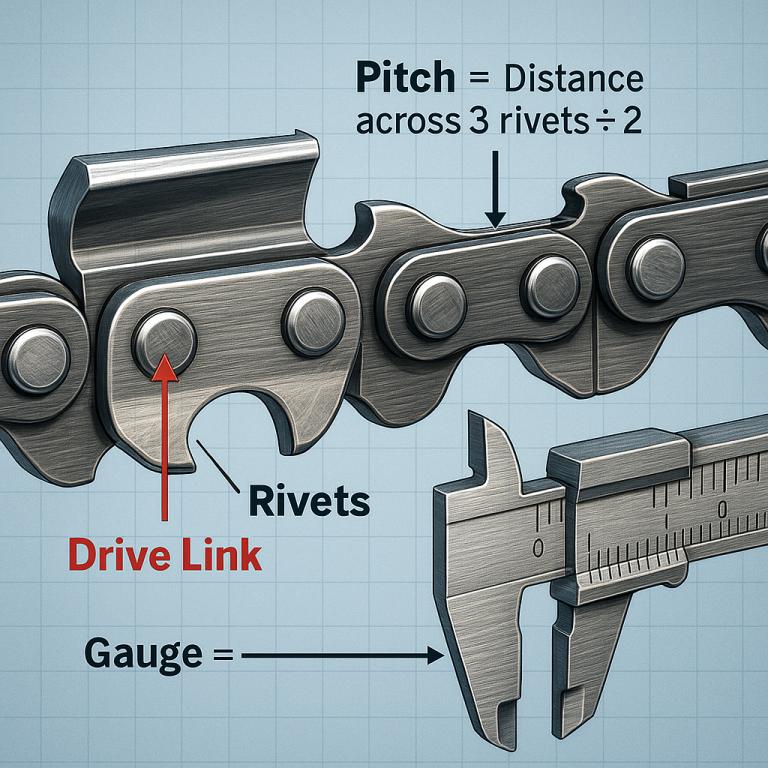
Found on the inner side of the chain, they guide it through the bar groove and help connect with the sprocket.
In addition, Tie Straps:
These connect the drive links and cutter teeth, ensuring the chain remains unified during use for every chainsaw chain styles.
Moreover, Rivets:
Acting like joints, rivets tightly hold all components together just as bones provide support beneath the skin.
Why Understanding Chain Parts Matters
By gaining a solid understanding of these elements, you’ll be able to recognize what makes one chain style different from another.
In the same way a bike chain relies on all its parts moving in sync, a chainsaw chain must function as a cohesive unit for maximum efficiency and safety.
🔧 Types of Chainsaw Chains
Additionally, the style of chains varies significantly depending on the arrangement of the cutter teeth as well as the sequence in which those teeth are positioned.
Never mismatch bar and chain sizes it can lead to dangerous kickbacks or equipment damage.
A. By Cutter Shape
- Full Chisel Chain 🪵 Best for: Hardwood, clean wood
Full chisel chains have square-cornered teeth, allowing them to cut aggressively through clean wood. However, they require frequent sharpening and are less forgiving in dirty or frozen conditions.
2. Semi-Chisel Chain
🌲 Best for: Softwood, dirty or frozen wood
✅ Pros: Holds edge longer, safer
❌ Cons: Slightly slower than a full chisel
Semi-chisel chains feature rounded teeth, making them more durable and versatile, especially in challenging conditions.
3. Low Profile (Safety) Chain
🧰 Best for: Homeowners, users with no skills
✅ Pros: Least kickback, easy to control
❌ Cons: Slowest cutting speed.
Designed with safety in mind, low-profile chains are ideal for casual users, balancing performance and control.
For a visual guide on chainsaw chain types, you can watch the following video:
B. By Tooth Arrangement
Full-Complement (Standard)
- Every cutter has a tie strap between smooth and clean cuts.
- Great for general use.
Skip-Tooth Chain
- Fewer teeth = faster chip clearing, used on long bars (24″+).
- Rougher finish but less clogging.
Semi-Skip Chain
- Mix of full and skip good balance of speed and cut quality.
📏Key Specifications: Pitch and Gauge
Understanding pitch and gauge is vital when selecting a chainsaw chain regardless of Chainsaw Chain Styles: Gauge is the thickness of the drive link that is set into the bar groove.
Pitch: The distance between three consecutive rivets divided by two. Common pitches include 1/4″, 0.325″, 3/8″, and 0.404″.
Gauge: The thickness of the drive link, fitting into the guide bar.
Common gauges are 0.043″, 0.050″, 0.058″, and 0.063″.
Common sizes of pitch: 1/4″, 0.325″, 3/8″, 0.404″
Accurate measurements ensure compatibility and optimal performance.
⚙️Chainsaw pitch is relative to shoe size, as it needs to fit your chainsaw perfectly.
🧩Choose the Chain Fitting for Your Chainsaw.
It is essential to choose the chain that best fits your chainsaw, since proper fit directly impacts performance, and ensures safety during operation. Moreover, a well-fitted chain reduces wear and tear on your equipment while enhancing cutting efficiency.
Study the manual, paying attention to the drive link count alongside the pitch and the gauge:
Meanwhile, go through the manual to measure pitch, gauge, and accurately count the drive links. This way, you’ll avoid mismatches and ensure peak performance.
In case you’re cutting hardwood, then a Full Chisel chain is your best bet. Because it offers aggressive cutting, it’s ideal for experienced users needing clean, fast results.
However, when dealing with dirty or frozen wood, a Semi Chisel chain is a wiser option. Since it retains sharpness longer under tough conditions, it outlasts more aggressive styles.
If you’re a beginner or still building confidence, then prioritize safety. Thus, a Low-Profile chain is highly recommended due to its reduced kickback.
On the other hand, if your chainsaw bar is 24 inches or longer, you should consider using a Skip-Tooth chain. Because it has fewer teeth, it reduces resistance and is better suited for high-power saws.
⚠️Warning
First and foremost, avoid combining chain types that have different pitch sizes or mismatched gauges. In other words, never use chains with differing specifications on the same saw. Because not every chain matches every type of pitch or gauge, it’s crucial to check compatibility beforehand. Otherwise, mismatched parts will undoubtedly result in unnecessary jamming, increased wear, and in the worst-case scenario dangerous kickback that puts both you and your equipment at serious risk.
Conclusion
To begin with, understanding the various chainsaw chain styles empowers you to make well-informed decisions. As a result, you not only enhance cutting performance but also significantly improve safety. Whether you’re a seasoned professional or simply a homeowner, selecting the right chain one that is specifically tailored to your task is absolutely essential. In fact, the right choice reduces risks, improves efficiency, and prolongs the lifespan of your equipment. Therefore, taking the time to learn about your options pays off in every possible way.
Looking for more Visit our website www.chainsawtips.com.
✅ Stay Safe Cut Smart
📌FAQs
No, not every chain is compatible with every chainsaw. Each saw requires a specific pitch, gauge, and drive link count that matches its bar and sprocket.
Full Chisel Chains have square-cornered teeth and are ideal for cutting hardwood quickly.
Semi-Chisel Chains have rounded teeth, making them better for dirty, frozen, or softwood.
Related Post
Chainsaw Chain Direction: Complete Guide for Beginners.
Chainsaw Chain Direction: Complete Guide for...
Read MoreWhy is my Chainsaw Chain not moving?
Why is my Chainsaw Chain not...
Read MoreChainsaw Case vs. Sheath – Which is Better for Protection?
Chainsaw Case vs. Sheath – Which...
Read MoreChainsaw Muffler Mod: Is It Worth Doing?
Chainsaw Muffler Mod: Is It Worth...
Read More