How to Check and Replace a Chainsaw Spark Plug?
Introduction
Your Electric Chainsaw is efficient and powerful, but its spark plug requires regular attention to ensure it’s in top shape. Troubles with starting, intermittent fires, or even stalling during use may warrant the need for replacing a chainsaw’s spark plugs. Proper maintenance on equipment helps maximize efficiency, environmental safety, and overall preserves the hardware over a longer period. In this guide, you will be equipped with the knowledge to replace a chainsaw spark plug, what tools are required, and with equal importance, why electric-powered tools also require the same attention as gas-powered models.
Table of Contents
ToggleWhat is a Chainsaw Spark Plug
A chainsaw spark plug is critical in gas-powered chainsaws as it ignites the air-fuel mixture during the engine combustion cycle. It also produces electric sparks for an engine to be started and run well.
🔌 That is the reason why the spark plug is often referred to as “chainsaw ignite trigger”.
🔍 Where is the spark plug located on a chainsaw?
The spark plug can easily be found sitting on the engine cover, which is protected by a cover or housing. Below are the steps to find it:
✅ Step-by-step location guide
- Always ensure that the chainsaw is turned off and has cooled down fully.
- Remove the top cover using either a screwdriver or a release latch, depending on your model.
- Look for the rubber spark plug boot, which appears as a thick wire connected to the plug.
- Gently pull off the boot to expose the plug.
- You should see the metal spark plug seated in the engine cylinder.
Why Electric Chainsaws Spark Plug Care Is Important.
Some might argue otherwise, but Electric Saws do have internal parts that need attention, such as the spark plug for hybrid models or fully battery-powered versions that have a combustion engine element. Ensuring the spark plug is well maintained aids in:
- Accelerated and seamless powering up of the device
- Optimal power output.
- Lower emissions and fuel consumption.
- Prolong the life of your chainsaw.
In addition, maintenance helps to avoid overheating and unexpected failures mid-way through a work session; this is critical in remote areas and during the use of portable chainsaws designed for RVs.
Tools You'll Need to Replace a Chainsaw Spark Plug
- Before you start the repair process, it is essential to gather these items:
- Spark plug socket tailored for chainsaws
- Socket wrench – For loosening and tightening the plug screw
- Gap gauge – For checking spark plug gaps
- Wire brush – For cleaning the old spark plug
- New spark plug – Check the manual for specifications
- Protective gloves – Essential for safety while doing maintenance work
🛠 Not required but helpful
- Spark plug cleaning with compressed air
- Anti-seize lubricant for easier removal next time
Step by Step to Replace a Chainsaw Spark Plug
Follow these steps carefully
- Turn Off the Chainsaw
Disconnect power or remove the battery if it’s a cordless model. - Access the Spark Plug
Remove the top cover using a screwdriver or quick-release latch. - Clean the Area Around the Plug
Use a brush or compressed air to clear debris and dust. - Remove the Spark Plug Wire
Gently pull the rubber boot off the plug. - Unscrew the Spark Plug
Use a spark plug socket and wrench to turn counterclockwise. - Check Spark Plug Condition
Look for signs of wear, carbon deposits, or corrosion. - Gap the New Spark Plug
Use a gap gauge to set the correct spacing as per the manual. - Install the New Plug
Screw in gently, then snugly tighten with the wrench. - Reconnect the Spark Plug Wire
Push the boot back into place until it clicks. - Test the Chainsaw
Reassemble the cover and start the saw to verify functionality.
Common Signs Your Spark Plug Needs Replacement
If you suspect your chainsaw spark plug needs replacement, consider these:
- Starting difficulties with the chainsaw
- Reduced cutting power
- Spark plug tip shows signs of blackening or oil-drenching
- Strange vibrations or misfires
- Increased consumption of fuel
These issues can occur with both portable chainsaws used in RVs and standard models.
Chainsaw Fuel Mix Ratio for Optimal Performance
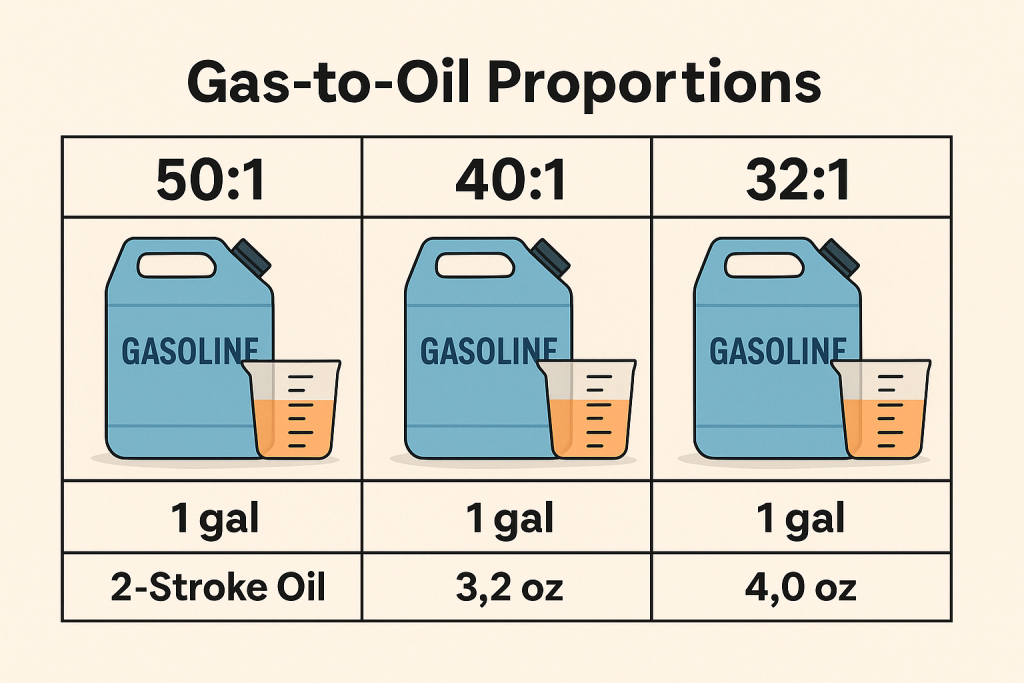
Electric Chainsaws do not need fuel mixed; however, hybrid and two-stroke models, often found in RVs, rely on the correct chainsaw fuel mix ratio. Ratios that are too rich or too lean will quickly clog the spark plug, jeopardizing ignition.
Standard mix ratios are
- 40:1 (3.2 oz of oil per 1 gallon of gas)
- 50:1 (2.6 oz of oil per 1 gallon of gas)
🔗 Read more on fuel ratios and manufacturer standards by STIHL to ensure your chainsaw runs smoothly and efficiently without risking engine damage.
Best Portable Chainsaws for RVs That Make Maintenance Easy
For RV travellers or camping enthusiasts, compact and easy-to-maintain tools are essential. These are some of the best-rated portable chainsaws for RVs that are easy to keep in good working order with basic spark plug service:
- DeWalt 20V MAX XR Chainsaw: Lightweight and efficient, with tool-free chain tensioning.
- Makita XCU03PT1 Cordless Chainsaw: Comes with two 18V batteries and has very good runtime off the grid.
- Greenworks 40V Cordless Chainsaw: Quiet, lightweight, and ideal for quick log-cutting tasks.
Tips to Make Spark Plug Maintenance Easier
If you wish to avoid replacing a chainsaw spark plug more often than necessary, observe the following rules:
- Use clean and quality fuel with the proper mixture ratio.
- Do not forget to clean the air filter regularly.
- Check the spark plug after every 10-15 hours of use.
- Do not use too much power to prevent overheating.
- Store in a dry and dust-free location
Your overall chainsaw and spark plug will perform better with regular maintenance, whether you’re trimming trees at home or using portable chainsaws for RVs.
🎥 How To Change Chainsaw Spark Plug
Conclusion
Regular maintenance is key to extending the life of your Electric Chainsaw. Learning how to replace a chainsaw spark plug not only boosts efficiency but also helps prevent mid-task failures. With the right tools, fuel mix, and habits, your chainsaw will remain dependable, whether you’re working at home or carrying portable chainsaws for RVs into the great outdoors.
✅ Stay Safe Cut Smart
📌FAQs
You should replace it every 20–30 hours of use or once a season, depending on usage frequency and fuel quality.
Only if the electric model includes a combustion engine component. Always check your owner’s manual.
For most two-stroke chainsaws, a 50:1 ratio is common. Always refer to your specific model’s requirements.
They are best for light to medium-duty work. For larger tasks, consider more powerful gas models.
Check for blackened electrodes, cracking, difficulty starting the saw, or inconsistent ignition.
Yes, but only once or twice. Persistent issues require full replacement.
Related Post
How to Cut Logs Without a Sawbuck: Alternative Techniques.
How to Cut Logs Without a...
Read MoreHow to Use a Chainsaw in Tight Spaces: Urban Felling Tips
How to Use a Chainsaw in...
Read MoreHow To Maintain Battery Powered Chainsaw?
How To Maintain a Battery-Powered Chainsaws?...
Read MoreHow to Check and Replace a Chainsaw Spark Plug?
How to Check and Replace a...
Read More