How to Fix a Slipped Chainsaw Chain?

Introduction

🧰 What Causes a Slipped Chainsaw Chain?

We will discuss the reasons later, but it is important to grasp the entire picture, so let’s start with the basics. Several problems can lead to chains being unaligned, including:  

  • Inadequate chain tension.  
  • Sprockets and bar rails that are damaged.  
  • Installation errors.
  • Use of incompatible chainsaw chain type. 
  • Buildup of debris in the guide bar groove.  

Understanding a problem is half the solution, and knowing how to fix it helps avoid additional and unwanted issues.  

🔧 Step by Step: How to Fix a Slipped Chainsaw Chain

⚠️ Safety First

Here’s an important checklist that should always be followed while doing repairs on a chainsaw. Make sure the following steps are done:  

  • The power source must be turned off, gas chainsaws should have their spark plugs removed, and electric models must be unplugged.  
  • Ensure to wear gloves for protection.  
  • The area you are working in should be clean as well as adequately lit.

🪓 Step 1: Open the Side Panel of the Chainsaw to Get to the Bar and Chain

Start unscrewing the nuts or clips fastening the side panel. This step unlocks the chain and bar components.

slipped chainsaw chain
Always disconnect the power before fixing a slipped chainsaw chain.

🔄 Step 2: Align the Chain on the Drive Sprocket and Bar Properly

  • Examine both parts for any signs of damage, wear, or tear that might have occurred.
  • Gently place the slackened chainsaw chain back onto the bar as well as the drive sprocket.

📝 Tip: Use the correct chainsaw chain type according to your chainsaw’s specs to avoid future slippage.

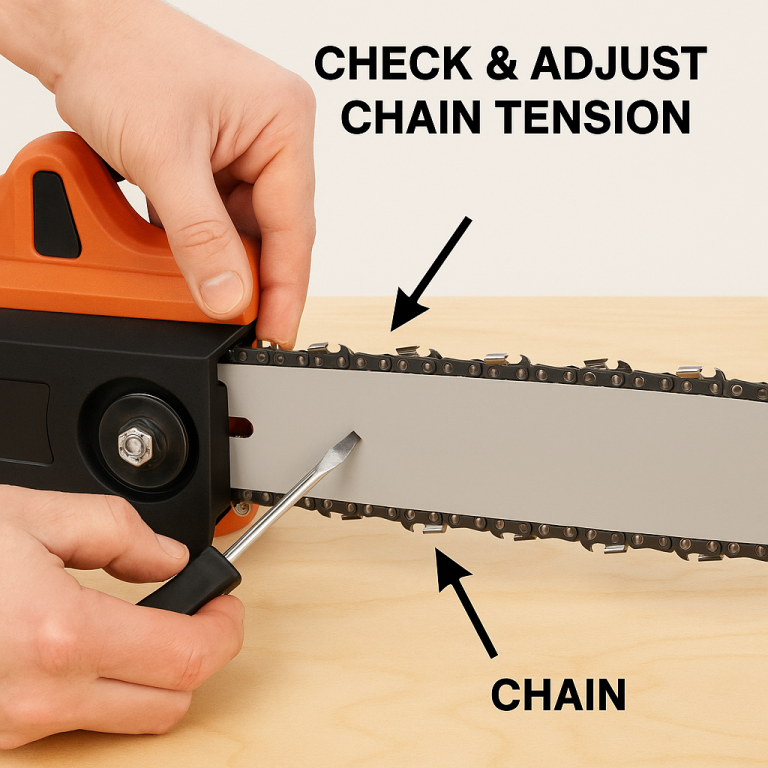
🔩 Step 3: Change the Chain Tension Settings

chainsaw chain type
Use the tensioning screw to achieve the ideal chain tightness.
  • Turn the tension screw which is usually placed at the bar. Follow the steps below.
  • Tighten so that there is no slack on the chain.
  • Make sure the chain can be pulled with a slight tug and will snap back to its place.
💡 If too tight, excessive wear on the bar may result. Conversely, too loose will create slack, which may lead to a future slippage problem. Explore the guide How to Tighten a Chainsaw Chain to learn about tensioning.

🧼 Step 4: Cleaning the Guide Bar and Lubrication

  • Over time, pieces of chainsaw dirt and sawdust may cause excessive buildup and result in a disengaged chainsaw chain.
  • To prevent disengagement, remove dirt with a soft brush or air compressor.  
  • For better performance, re-lubricate using chainsaw bar oil. 

🔧 Step 5: Testing After Reassembly

  • Reattach side covers and gently tighten bolts.
  • Test the chainsaw by powering it up to safe levels and rotating a few times. During this time, ensure that the chain moves freely. 

🔍 Chainsaw Myths You Shouldn't Believe

When looking for the Best Chainsaws Under $200 for yourself, it is important to note some of the most popular chainsaw myths.  

“Tighter chain = safer chainsaw.” Over-tightening can damage components.  

“All chains fit all saws.” The wrong chainsaw chain type can slip or derail.  

“Used chainsaws aren’t safe.” With proper maintenance, budget models can perform excellently.

🛒 Upgrade Considerations: Chainsaw Troubleshooting

If you find yourself repeatedly adjusting a slipped chainsaw chain, consider purchasing one of the Best Chainsaws Under $200. These models come with an automatic chain tensioning feature and provide additional safety functions.

🎥Chainsaw Myths

Suggested Models:

  • Greenworks 40V Cordless Chainsaw – Best for home use 
  • WEN 4017 Electric Chainsaw – Lightweight, casual use companion
  • Ryobi 18V One+ Brushless Chainsaw – Excellent for mobile use

These models are cost-effective and efficient, perfect for novices and veterans alike.

Summary Checklist

  • Unplug or disable your chainsaw
  • Remove the side cover
  • Realign and reposition the chain
  • Currently adjust the tension
  • Clean and lubricate the bar
  • Reassemble and test

Conclusion

The first time you see a chainsaw with a slipped chain, you might be tempted to think it is a challenging task to fix it. It is not an impossible task as long as the right procedures are followed with safety in mind. Regular maintenance checks, correct chain tension, as well as selecting the appropriate type of chainsaw chain play a significant role in the efficiency of operation of the saw. A consistently derailing or slipping chain highlights the chainsaw’s underlying issues; this is why options like Best Chainsaws Under $200 are so important. They are inexpensive and come with essential safety features to properly secure the user and allow easy chain tension adjustment. For both advanced learners and casual weekend handymen, equipment that boosts performance and reduces breakdowns is invaluable. 

Enhanced performance equipment can prove effective for beginners working on DIY projects during the weekend, which is why finding dependable tools under $200 is a smart choice. Always remember to steer clear of Chainsaw Myths sharp and properly maintained chainsaws are a great aid during outdoor activities.

✅ Stay Safe, Cut Smart.

📌 FAQs

How often should I tighten my chainsaw chain?

Check the tension before each use. A chain that loosens frequently might indicate deeper issues, especially if you’re using an older or off-brand chainsaw chain type.

Can I use WD-40 instead of chainsaw oil?

Not recommended. WD-40 evaporates quickly and doesn’t provide long-term lubrication. Invest in proper chainsaw bar oil instead.

hy does my chain keep slipping even after fixing?

You might be dealing with worn-out sprockets, a poor-quality bar, or using the wrong chainsaw chain type. Also, don’t underestimate how chainsaw myths can mislead maintenance routines.

Are budget-friendly chainsaws reliable?

Absolutely. Many of the Chainsaws Under $200 come with features like tool-free tensioning, anti-kickback bars, and solid warranties. Reliability often comes down to proper care.

Related Post

Leave a Comment

Your email address will not be published. Required fields are marked *