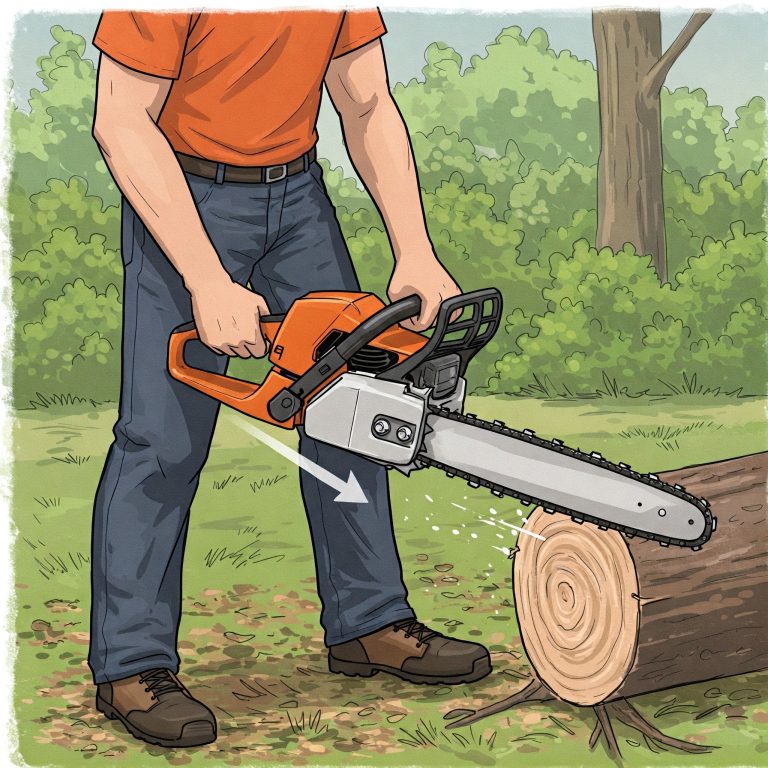
How To Properly Use a Chainsaw
Chainsaws are powerful and multipurpose tools essential for storm cleanup, tree felling, and firewood cutting. But if handled incorrectly, they can result in serious injuries. Whether you’re new to chainsaws or an experienced user looking to enhance your skills, this chainsaw operating guide for beginners covers the best practices for safe and efficient chainsaw operation. You’ll learn everything from choosing the right chainsaw according to its types to essential safety measures as well as how to use chainsaw. For more tips and tool comparisons, check Stihl’s safety guide or Husqvarna’s chainsaw resources. available, how to use a chainsaw, and choosing the right one for the job.
Table of Contents
Toggle1. Put On The Appropriate Safety Equipment
Wearing the right protective gear is a crucial first step in learning how to use chainsaw safely. Always wear a helmet with a face shield, cut-resistant gloves, chainsaw chaps, and steel-toe boots. These essentials minimize injury risks and prepare you for responsible chainsaw operation, which you can learn in detail by following the given points.
- A face shield attached to a helmet protects you from any debris getting into your eyes.
- Chainsaw chaps are great for mitigating leg injuries.
- Protect your ears with earmuffs from potentially damaging sounds.
- Increase the grip while protecting your hands with gloves.
- Lastly, secure your feet with steel-toe boots to protect them.
- Don’t forget to wear all other recommended safety gear.
2. Check the Chainsaw
- Every use of a chainsaw should begin with an inspection. As emphasized in this chainsaw operating guide for beginners, the correct use of chainsaws starts with checking their working condition.
- The first step is to check the balance of the chain make sure it is neither too loose nor too tight, as this could cause it to derail or damage the bar.
- Double-check all essential supplies: ensure there’s enough oil in the bar oil reservoir and confirm it’s being pumped properly to the chain.
- Also, inspect the chain brake make sure it’s functioning correctly to stop the chain during a kickback.
- When using gas-powered saws, safely fuel and start the machine with the correct fuel mixture, and always start it on flat, stable ground never by drop-starting.
- Keeping your saw in optimal condition is a key component of any chainsaw, as it directly enhances performance and ensures user safety.
3. Correct stance and grip for the chainsaw
Maintaining the right stance and grip is vital for control and safety while using a chainsaw. This chainsaw operating guide for beginners emphasizes keeping both hands on the saw and your feet shoulder-width apart for maximum stability.
- Grip Maintain both hands on the chainsaw at all times. Left hand on the front handle, the thumb wraps beneath, right hand positioned on the rear handle.
- Stance Feet should be spaced shoulder width apart. It is important to keep the saw close to the body for better control. The chainsaw should never be operated above shoulder level.
4. Cutting Techniques Every Beginner Should Master
First, interact with the saw slowly apply lighter pressure and allow the chain to do the cutting. Next, avoid the Kickback zone, which is most likely to occur at the upper tip of the bar. Then, the order of the cuts should always be planned create a clear sequence for how the limb or tree will be cut and safely removed. Additionally, when starting a new cut, ensure the chainsaw is at full speed, as chains running at full speed tend to perform better. Importantly, never cut with the tip of the saw this can cause sudden and extremely uncontrollable kickback. By mastering these techniques, you will learn how to use chainsaw more efficiently, with enhanced safety and precision.
5. Smart Chainsaw Use: Take Breaks and Stay Alert
Chainsaw work is physically strenuous. Maintain your focus, especially when fatigued. Relief breaks should be taken to eliminate weariness that can lead to accidents.
Always ensure that your work area is free of all moving obstacles and that no one is standing within the danger zone at least two tree lengths from the base of the trunk when felling trees.
Conclusion
Knowing how to effectively perform chainsaw work safely and efficiently requires one to understand proper safety gear, chainsaw maintenance, as well as the user’s stance to grips, and cutting techniques.
You will find yourself wielding a chainsaw like a professional in no time.
For more chainsaw safety tips and maintenance guides, visit Chainsawtips.com your trusty website for all chainsaw needs.
✅ Stay Safe Cut Smart
📌FAQs
No—pitch must match exactly.
After 3–5 sharpening, or if teeth are damaged.
Related Post
How to Cut Logs Without a Sawbuck: Alternative Techniques.
How to Cut Logs Without a Sawbuck: Alternative Techniques Introduction...
Read MoreHow to Use a Chainsaw in Tight Spaces: Urban Felling Tips
How to Use a Chainsaw in Tight Spaces: Urban Felling...
Read MoreHow To Maintain Battery Powered Chainsaw?
How To Maintain a Battery-Powered Chainsaws? Introduction The Battery-Powered Chainsaw...
Read MoreHow to Check and Replace a Chainsaw Spark Plug?
How to Check and Replace a Chainsaw Spark Plug? Introduction...
Read More