Chainsaw Tensioning: Is Tool-Free Worth the Investment?
Introduction
Keeping the chain on a chainsaw properly tensioned is one of the easiest ways to stay safe and get good cuts. Believe it or not, a quarter turn of the tension screw can change how the saw bites into wood and how it feels in your hands. Among the many brands out there, DeWalt chainsaws stand out lately for tough tools that let you adjust chain tension without any extra wrench. But does their quick-release setup give enough gain to ditch the old-school trick of using a scrench? In the coming sections, we will weigh both choices and branch into related tasks like sharpening, pole-saw work, and stowing the saw for winter. Well, even tackle the main question: Chainsaw Tensioning is a tool-free tension system worth the price bump?
Table of Contents
ToggleChainsaw Tensioning: Why It Matters
A well-tensioned chain runs smoother, cuts better, and poses fewer safety risks. If the loop hangs too loose, it can jump off the guide bar and kick back, throwing metal teeth in every direction. Crank it too tight, however, and the added load chews up the bar, the sprocket, and the motor, often long before you notice.
Traditional Chainsaw-Tensioning typically requires a scrench or screwdriver to loosen bar nuts and manually adjust the chain. Here’s a basic overview:
- Loosen the guide-bar nuts, and
- Turn the tensioning screw clockwise to tighten or counterclockwise to loosen.
- Tighten the bar nuts back.
This old trick works- during most cuts, anyway- but out in the woods, it can chew up minutes you don’t have. At the same time, chainsaw makers have rolled out a slick answer that swaps inconvenience for speed.
The Innovation: Tool-Free Chain Adjustment Systems
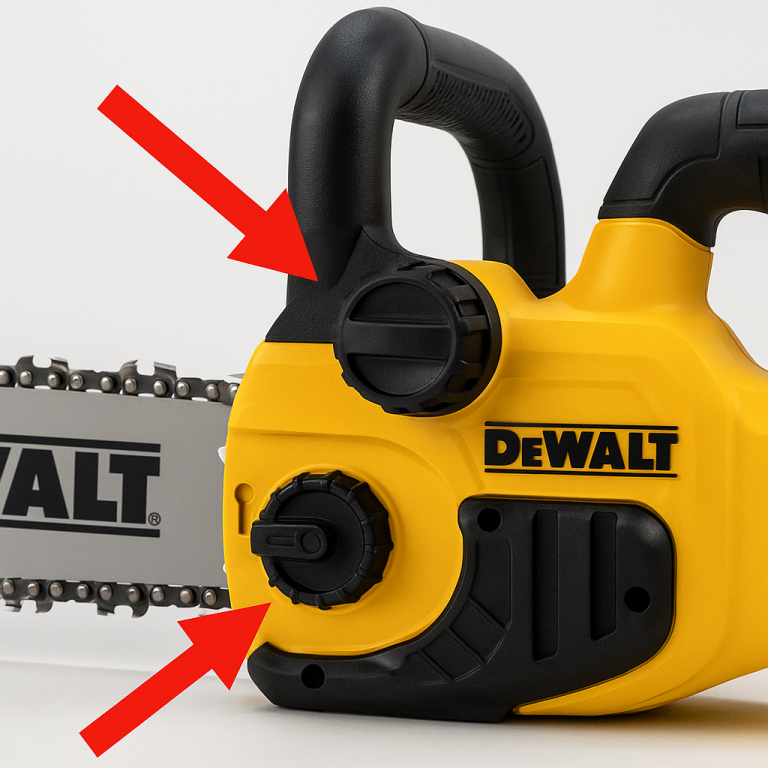
With a tool-free setup, a battered screwdriver or cramped wrench stays in your pocket. Instead, a solid knob or easy lever lets you dial in tension almost on instinct.
DeWalt carries the idea in its 20V MAX* XR and 60V MAX* models, pairing muscle with real-world usability. Thanks to their tool-free setup, you can:
- Tweak the chain in seconds and keep the job rolling.
- Cut prep time so you spend less energy before every task.
- Check tension anywhere, even mid-slice, with no fuss.
Still, fresh solutions always prompt a simple question: can the shortcut beat decades of tightening by feel?
Weighing the Benefits: Is Tool-Free Chainsaw Tensioning Right for You?
Pros of Tool-Free Tensioning:
- Faster adjustments in the field.
- No need to carry extra tools.
- Reduced downtime, increasing productivity.
- Enhanced user experience, especially for beginners.
Cons to Consider:
- Some models use plastic components that may degrade over time.
- Less tactile control compared to manual tensioning.
- Tool-free chainsaws sometimes cost a little more.
- Still, routine upkeep goes far past quick tensioning.
Chainsaw Care: More Than Just Tension
Chainsaw Sharpening:
A blunt chain slows cuts and forces the motor. No matter your skill level, regular Chainsaw Chain Sharpening is essential. You can hand-file with a round stone and guide, or use a Chainsaw Sharpening Machine for effortless, even edges. For more, see our full Chainsaw Sharpening Guide.
How to use a chainsaw:
Understanding how to use a chainsaw safely starts with learning the correct grip, cutting technique, and body positioning before making any cuts. DeWalt cordless models make the task easier, not just with chainsaws, but also with tools like their Pole Saw allowing you to tighten the chain in seconds using a convenient tool-free system.
Chainsaw Storage:
- Brush off chips and sap.
- Drain fuel from gas models and empty or loosen the oil cap on cordless units.
- Hang the saw in a dry, secure place with fresh air.
Pole Saws and Tensioning:
Even a pole saw needs its chain tightened now and then. Many DeWalt models let you do that without tools, so you keep cutting cleanly on high limbs.
🎥CORRECT WAY To Adjust The Chain Tension On Your Chainsaw
Conclusion
Whether you are tidying the yard or clearing storm debris, a properly tightened chain is a must. DeWalt chainsaws help with systems that require little more than a quick turn. Purists may cling to the old-school way, yet most home pros will pay a little extra for the time saved. By balancing easy adjustments with solid build quality, DeWalt gives today’s users a worthy option.
✅ Stay Safe, Cut Smart.
📌FAQs
Always check before each use and during long cutting sessions. For DeWalt chainsaws, inspect the tension every 10–15 minutes.
Yes! The sharpening process is the same regardless of the tensioning method.
Not significantly. Most DeWalt chainsaws now feature durable materials that enhance longevity, even with tool-free components.
Absolutely. Many Pole Saw models from DeWalt include this feature, making tree-trimming safer and faster.
Related Post
Chainsaw Vibration: How It Affects Your Health and Safety.
Chainsaw Vibration: How It Affects Your...
Read MoreWhat do chainsaw injuries teach us about safety?
What do chainsaw injuries teach us...
Read MoreChainsaw Training for Beginners: Essential Safety & Usage Tips.
Chainsaw Training for Beginners: Essential Safety...
Read MoreWhich chain is better, carbide chain or steel chain?
Which chain is better, carbide chain...
Read More