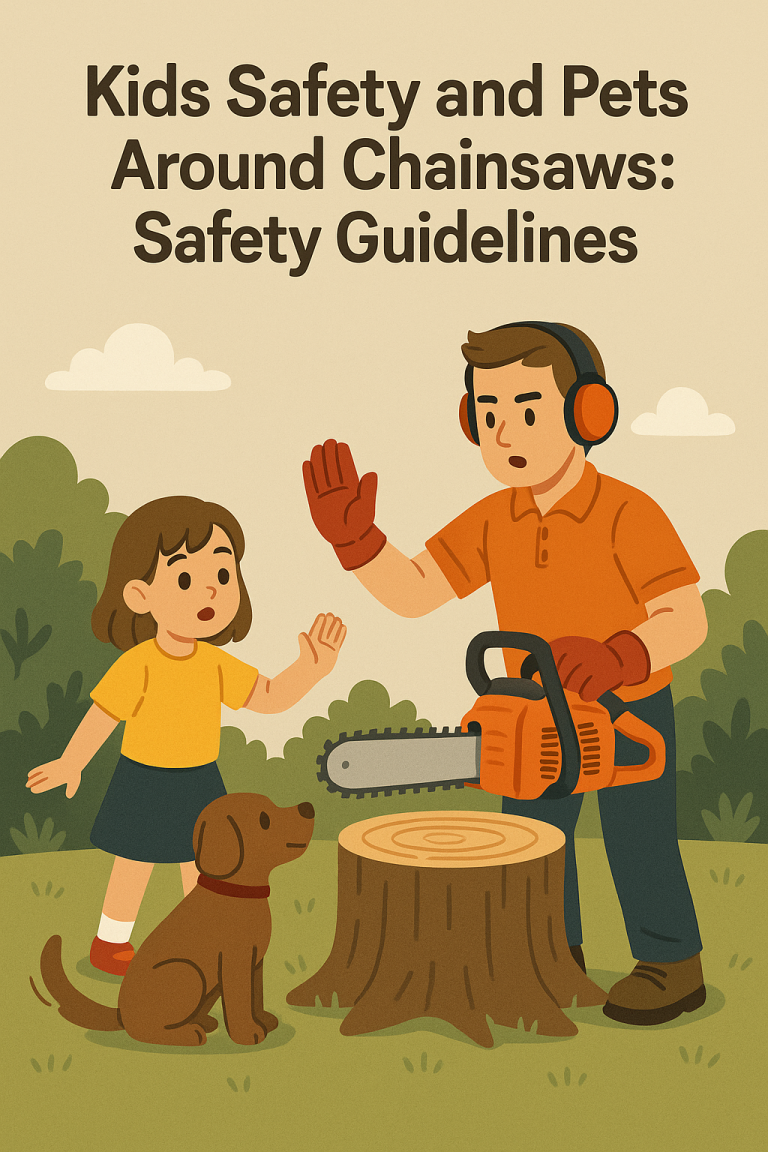
Kids' Safety and Pets Around Chainsaws: Safety Guidelines.

Introduction

Chainsaws pack real bite, so when kids or pets hang around, their power quickly swaps from useful to dangerous. Picture notching a branch, your toddler edging forward, or your dog darting after the angry whine; there is zero space for even a tiny slip. The new mini chainsaw models may look harmless in your toolbox, but they bite just as hard so the same steady eye and strict rule-following applies for kids safety and peace of mind.

This quick guide shows easy ways to keep your crew safe while you cut firewood, trim branches, or clear storm mess. By spotting hazards early and sticking to a handful of simple rules, you finish the job and walk back inside without anyone hurt.

Understanding the Risks: Ensuring Kids Safety and Pet Well-being

Children and pets have no idea even a mini chainsaw can hurt them. Their curiosity, or panic from the noise, can pull them into the danger zone fast.

Common Hazards Include:

  • Direct Contact: A careless brush can mean deep cuts.
  • Flying Debris: Chips and splinters sting eyes and skin.
  • Noise Sensitivity: The roar may scare an animal, making it bolt into your path.
  • Exhaust Fumes: In a shed or small yard, fumes harm lungs.
  • Trip Hazards: Cords, off-cuts, or loose tools can send anyone tumbling.

A tiny battery-powered mini chainsaw, although quieter and easier to hold, can bite deep enough to put a person in the hospital. For that reason, you need the same no-nonsense focus you’d give a hefty lumberjack model. Knowing what might go wrong is the first step toward keeping everyone out of trouble.

Core Chainsaw Safety: A Foundation for Kids' Safety

Before you worry about kids or pets, nail down the basics that protect everyone on site.

Personal Protective Equipment (PPE) is Non-Negotiable

  • Hard Hat: Stops falling branches from cracking a skull.
  • Safety Glasses/Goggles: Shields eyes from flying chips and dust.
  • Hearing Protection: Let’s you finish a long job without ringing ears.
  • Heavy-Duty Gloves: Give you a solid grip and block cuts.
  • Chainsaw Chaps/Pants: Stops the chain before it reaches your skin.
  • Steel-Toed Boots: Grips mud and keeps feet safe from weighty logs.
kids safety

Pre-Operation Checks

  • Check chain tension; it should snap back, not sag.
  • Look at the teeth; sharp blades cut cleaner and bind less.
  • Top off bar oil and use the right mix or a full battery.
  • Test chain brakes and watch for loose nuts before you start.
  • A well-kept Best Home Chainsaw stalls less, bites deeper, and is simply easier to control.

Starting Safely

  1. Rest the saw on stable ground, not sagging bark or loose chips.
  2. Engage the chain brake before you pull the cord or hit the button.
  3. Start far from clutter, conversations, or anyone leaning in to watch.
  4. Never drop-start; a shoulder kick can send the chain flying.

Basic Cutting Techniques

  • Grip the rear and front handles with both hands, knuckles forward.
  • Set your feet shoulder-width apart, knees slightly bent for balance.
  • Don’t cut above shoulder height; the risk climbs with your arms.
  • Watch out for kickback zones; keep the tip clear of wood or metal.
  • Wood tension in a log can shift unexpectedly. Learn to spot the signs before you cut.

This routine, once learned, helps you run a chainsaw safely around children and animals.

Putting Kids and Pets First When You Cut Wood

  1. Before You Start: Build a Safe Zone for Kids
  2. A clear work zone nearly wipes out the chance that a child or pet gets too close.
  3. Safe Zone Setup Ideas
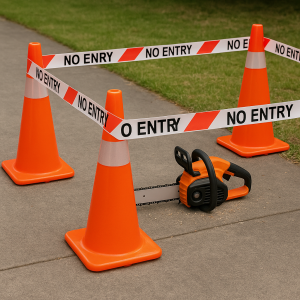
  4. Mark the border with cones, tape, or other bright barriers.
  5. Tell kids in simple words what the line means.
  6. Keep dogs and cats inside or behind a sturdy fence.
  7. Ask another adult to watch the young ones or furry friends.
  8. Post signs to warn anyone passing by.

Even with a tiny battery saw, all these steps matter. Its small size can fool you into thinking it isn’t dangerous.

During the Cut: Stay Alert and Engaged

  • While the saw runs, remember to:
  • Keep an eye on the area all the time.
  • Work with a partner, especially on big jobs.
  • Kill the engine at once if someone crosses the line.
  • Never leave a hot, noisy saw to check on kids.
  • Sweep away shavings, leaves, or loose bark.
  • Stop now and then to look around.

After the Job: Locking Up for Kids' Safety

  • Turn off the saw and let it cool completely.
  • Tidy the worksite and store the tool, blades, and fuel in a locked shed or cabinet.
  • Pick up all sawdust, spilled fuel, and loose twigs.
  • Double-check for hidden hazards before letting kids or pets return.
kids safety

Advanced Chainsaw Use: Keeping Children Safe During Complex Jobs

Cutting Down a Tree

  • Felling a tree brings extra danger- dropped limbs, shifting trunks, and surprises no one sees coming. It’s not a job to wing.
  • Whenever you can, call a certified arborist. If you carry on yourself:
  • Mark a danger zone at least 150 feet from the fall line.
  • Clear every dog, cat, and child from that whole zone.
  • Plan and clear two quick escape paths.
  • Think about wind, slope, and where the tree could slide.
  • In this work, caution feels optional only until something goes wrong.

Fuel, Maintenance, and Storage Beyond the Cut

  • Always refuel well away from flames and in open air.
  • Store fuel in vented, tamper-proof cans kept out of reach.
  • Cover the bar and chain before placing tools on a shelf.
  • Regularly service machines to catch problems early.
  • Keep a first-aid kit where you can grab it fast.

Small electric saws are also popular with many homeowners because they run quietly, release no exhaust, and suit yards with young kids or sensitive pets.

Educating and Supervising for Uncompromised Kids' Safety

First, teach older children to keep their distance from any running or idle chainsaw and to trust that a machine that bites wood could easily hurt a careless hand. When kids see the danger clearly, they choose caution over curiosity.

Second, steady adult supervision is the one rule that cannot be bent or broken. Locking tools up is wise, yet even the best lock can’t replace a grown-up’s glance or calm word. Your attention is by far the strongest safety shield.

Third, Wearing proper Personal Protective Equipment (PPE) is essential for preventing injuries and setting a strong example of kids safety when using even a mini chainsaw around the home.

Fourth, respect, not horsepower, guards people around the saw, whether it shrinks into a battery-powered helper or roars like a full-size model. Follow the guide, keep the chain sharp, and stop if something looks off.

Conclusion

Stay safe together. Mark no-go lines, store blades out of reach, and operate each cut as if lives depend on it, because they do.

So, treat even a small saw like serious equipment. Spread the know-how, check equipment daily, and let safety habits grow around every project.

✅ Stay Safe Cut Smart

📌FAQs

Is a mini chainsaw safer around kids than a full-sized one?

Not necessarily. While it’s smaller, a mini chainsaw can still cause serious injuries. It must be treated with the same precautions.

How far away should kids and pets be from someone operating a chainsaw?

At least 150 feet is recommended, especially during heavy-duty cutting or felling work.

Should I consider an electric chainsaw for improved kids' safety?

Yes. Electric models reduce noise and emissions, which can minimize panic in pets and children.

Leave a Comment

Your email address will not be published. Required fields are marked *